
Our Blog
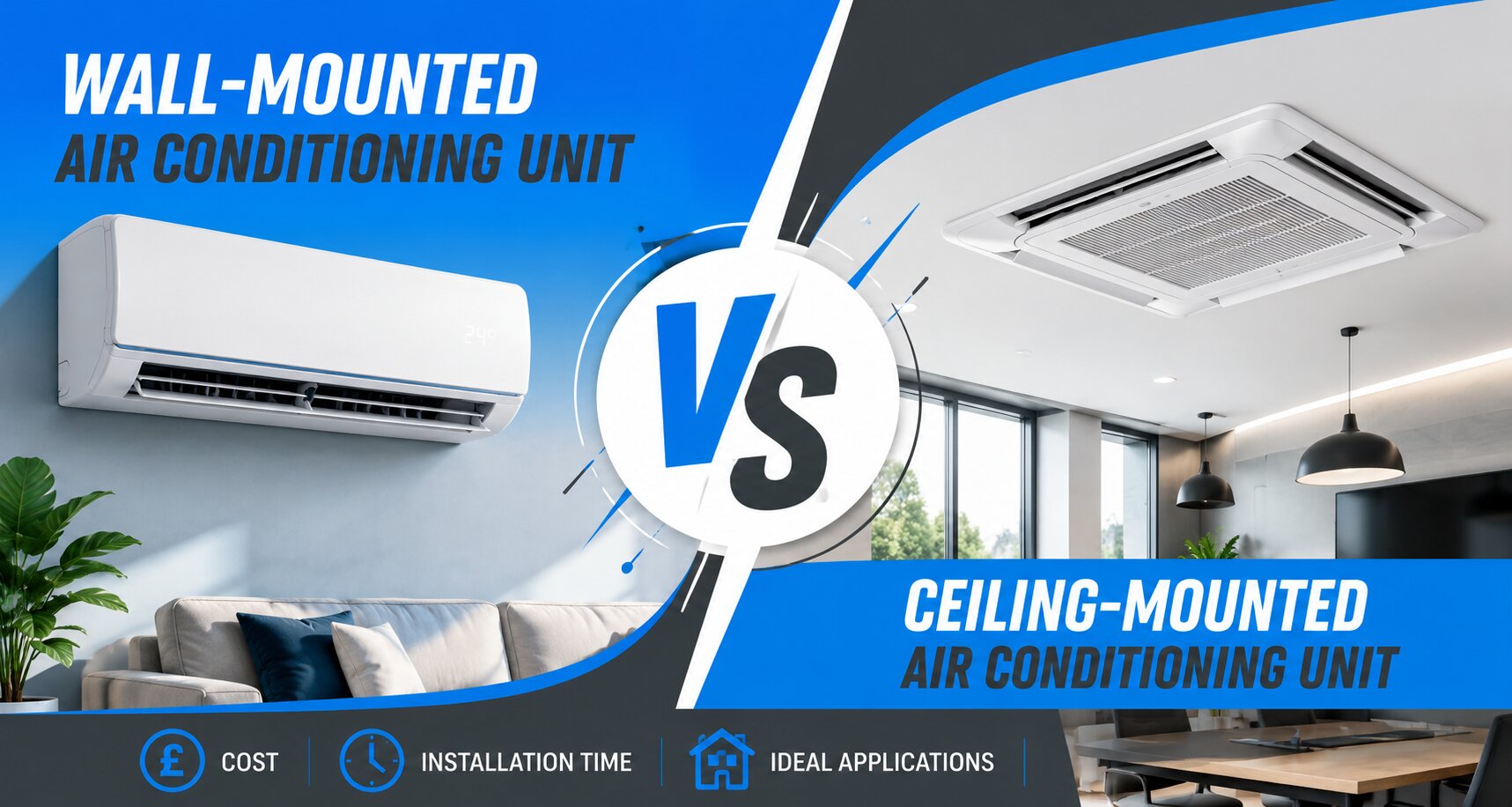
Wall-mounted vs Ceiling-mounted Air Conditioning Units
We’ve all been there. It’s 2am in the middle of July, the duvet has been kicked onto the floor, and you’re lying there like a starfish, praying for a breeze. You’ve got a tower fan in the corner that sounds like a jet engine taking off, but all it’s really doing is pushing warm air around the room.
It’s usually about this time that the average Brit decides enough is enough.
Air conditioning in the UK has shifted from being a “nice-to-have” luxury for fancy hotels to a genuine necessity for homeowners who value a good night’s sleep. But once you’ve decided to take the plunge, you’re hit with the next big question: what kind of system do you actually need?
At Christy Cooling Services, we have spent over 30 years installing climate control systems across Essex and London. We know that picking the right unit isn’t just about temperature—it’s about aesthetics, budget, and the physical limitations of your property.
To help you decide, we’re breaking down the two heavyweights of the domestic cooling world: the trusty wall-mounted unit and the sleek ceiling-mounted cassette.
What are wall-mounted air conditioning units?
If you close your eyes and picture an air conditioner, you are probably picturing a wall mounted air conditioner UK homeowners are most familiar with. These are known in the trade as “high-wall split systems.”
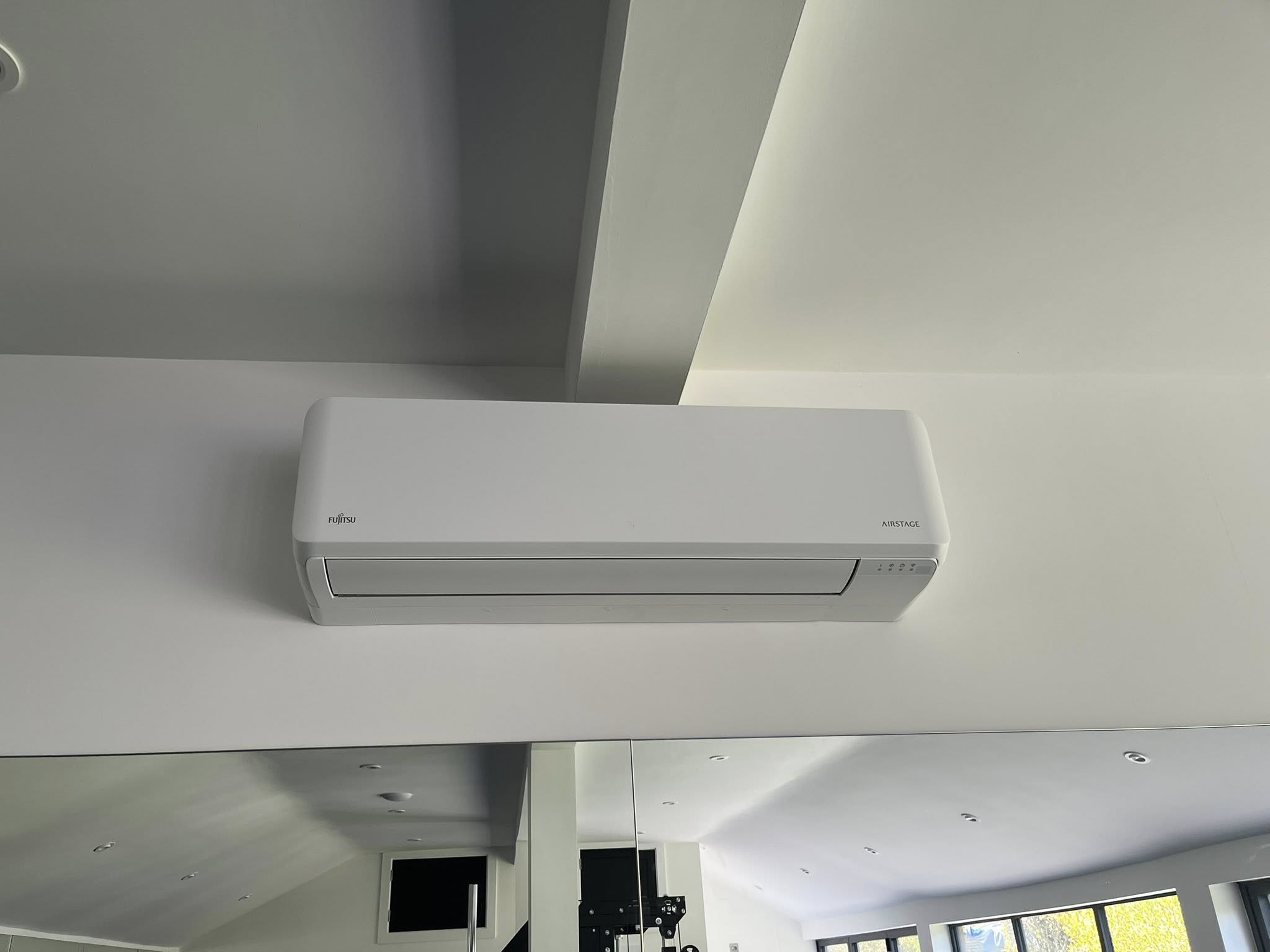
They consist of a rectangular white unit installed high up on an internal wall, connected via copper pipes to an outdoor unit (the condenser – the bit that does the noisy work outside).
Cooling power performance and efficiency
Don’t let the standard look fool you; these units are workhorses. Because they are positioned high on the wall, they are excellent at blasting cool air across a room. Cold air is denser than warm air, so it naturally sinks, helping to cool the space quickly.
Modern inverter technology means these units are incredibly energy efficient. They don’t just blast icy air until you freeze and then shut off; they modulate their output to maintain a steady temperature, sipping electricity rather than gulping it.
Pros and cons
The good stuff:
Cost-effective: Generally, these are the most affordable option for both equipment and installation labour.
Retrofit-friendly: They are relatively easy to install in existing properties without needing major renovation work.
Zoning: You can have different units in different rooms set to different temperatures.
The not-so-good stuff:
Aesthetics: Let’s be honest, it’s a white plastic box on your wall. While modern designs are sleeker (some even come in grey or black), they are always visible.
Directional airflow: While the louvres move, the air comes from a single source, which can sometimes create a draught if you are sitting directly underneath it.
Who is this best for?
The wall-mounted unit is usually the best type air con unit for standard UK bedrooms, living rooms, and home offices. If you live in a brick-built home with standard ceilings and want a solution that doesn’t involve tearing your ceiling down, this is likely your winner.
What are ceiling-mounted air conditioning units?
When we talk about ceiling mounted units (also known as ceiling cassette air conditioners) in a domestic setting, we are usually referring to “ceiling cassettes.” You might also hear about ducted systems (which are hidden entirely with just grilles showing), but cassettes are the square units you often see flush-mounted into the ceiling of offices or shops.
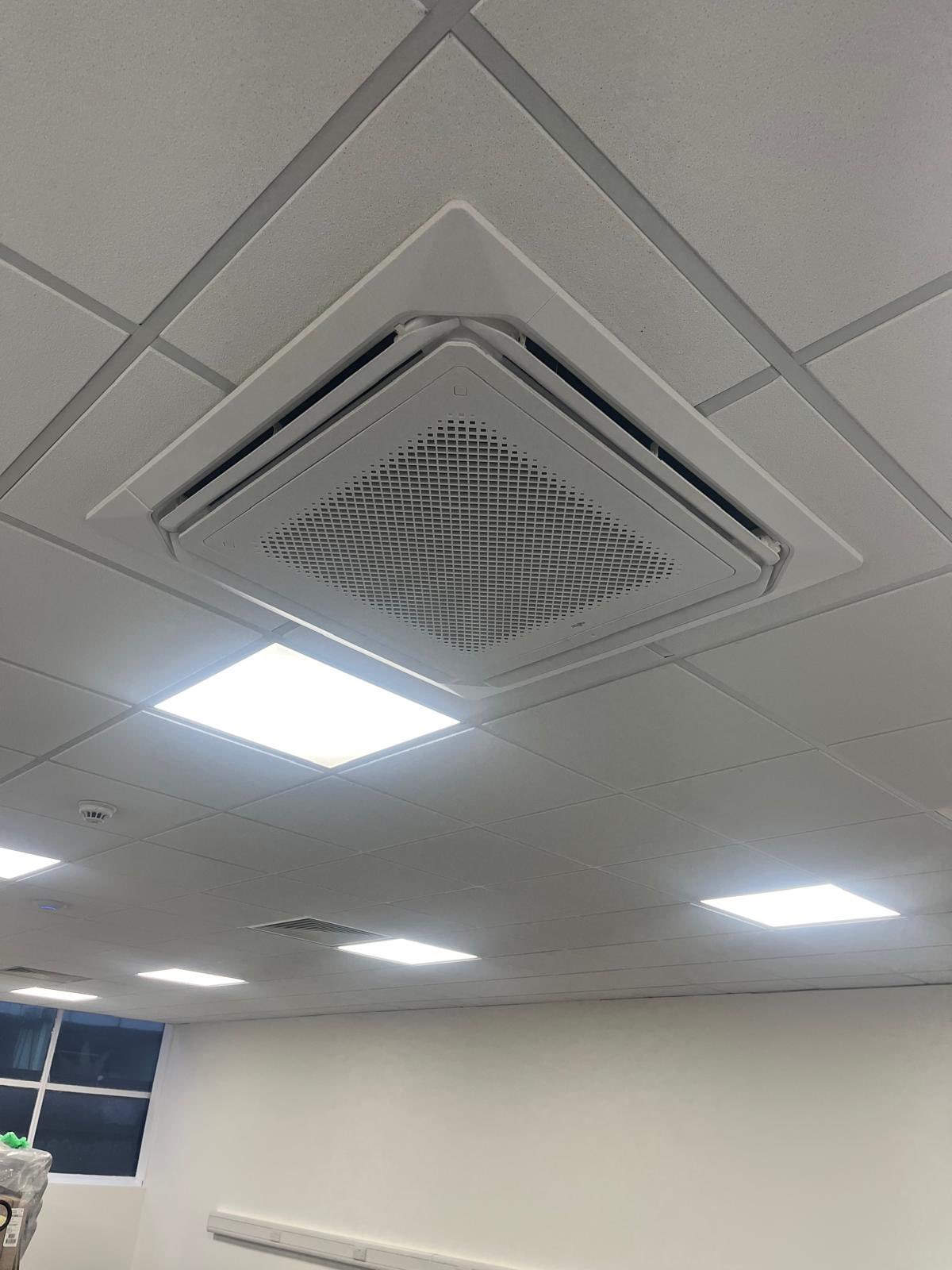
A ceiling mounted air conditioner UK residents opt for is typically designed to be unobtrusive. The bulk of the machine sits inside the ceiling void, leaving only a decorative grille visible from below.
Cooling power performance and efficiency
The cooling power of a ceiling cassette is often superior to a wall unit for one key reason: distribution. Because they are typically centrally located in the room, they can blow air in four directions (360-degree airflow). This eliminates hot spots and cools a large area very evenly.
Pros and cons
The good stuff:
Aesthetics: They look professional and tidy. Since they sit flush with the ceiling, they don’t take up any wall space—perfect if you have tall furniture or lots of artwork.
Airflow: The four-way blow means no draughts on the back of your neck; just a gentle blanket of cool air descending from above.
Power: They are often capable of cooling larger open-plan spaces more effectively than a single wall unit.
The not-so-good stuff:
The “Void” issue: This is the big one. To install ceiling cassette units, you need a false ceiling or a void of at least 250-300mm. Most standard UK homes have plasterboard nailed directly to joists, meaning there is nowhere to hide the unit.
Cost: The units are more expensive to buy, and the installation is more labour-intensive.
Access: Maintenance can be a bit trickier as everything is happening at height.
Who is this best for?
Ceiling cassettes are ideal for extensions, conservatories with bulkheads, or modern apartments that feature suspended ceilings. They are also the gold standard for large open-plan kitchen-diners where a single wall unit might struggle to push air to the far corners.
Key differences
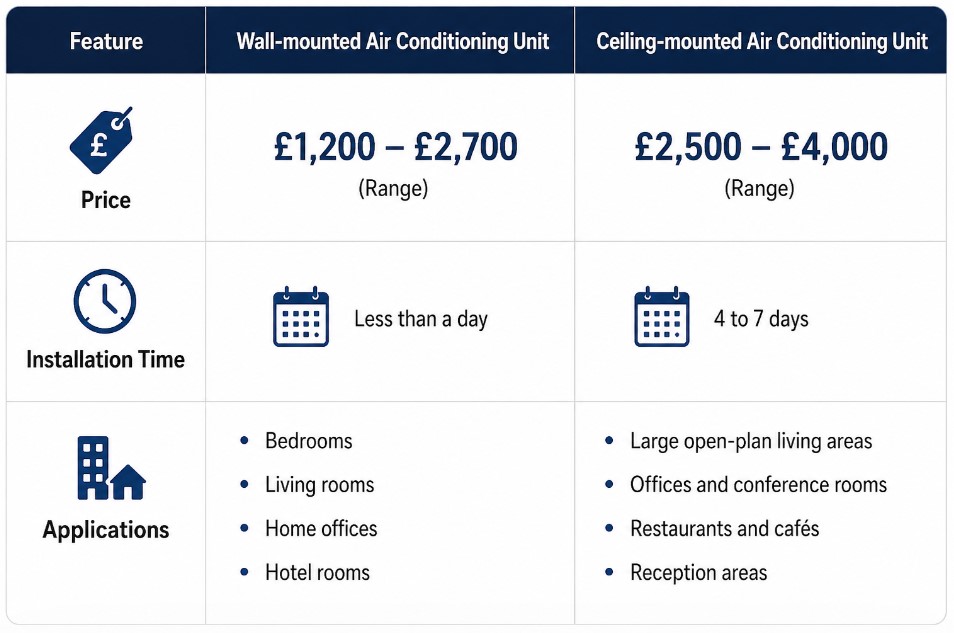
Still on the fence? Let’s look at how they stack up against each other in the areas that matter most to your wallet and your walls.
Performance
If you have a massive open-plan living area, a ceiling cassette wins. Its ability to throw air in all directions ensures the whole family stays cool, not just the person sitting on the sofa nearest the wall. However, for a standard double bedroom, a wall-mounted unit provides more than enough power and will cool the room down in minutes.
Price
This is often the deciding factor. A wall-mounted system is the budget-friendly champion.
Wall-mounted: A typical high-quality installation for a single room might range between £1,200 and £2,700 (depending on the brand and complexity).
Ceiling-mounted: Because of the extra labour and more expensive hardware, you can expect to pay significantly more—often starting higher than wall units and increasing if structural work is needed to create a void.
Installation requirements and time for each AC unit
This is where the reality of British housing stock comes into play.
Wall-mounted: Our engineers at Christy Cooling Services can often install a single wall unit in less than a day. We drill a small hole through the wall for pipes, mount the plate, hang the unit, and connect it to the outside. Minimal mess, minimal fuss.
Ceiling-mounted: These require more planning. Do you have a ceiling void? Is it deep enough? We also need to install a condensate pump (to push water up and away) which adds a layer of complexity. Installation takes longer and can be messier if ceiling modifications are required.
Frequently asked questions
How long do these units last?
Whether you choose wall or ceiling mounted, if you buy from reputable brands like Mitsubishi or Daikin (which we install), you are looking at a similar lifespan. With regular maintenance, you can expect 10 to 15 years of reliable service, sometimes even pushing 20 years.
Which requires more maintenance?
Both need love to keep running efficiently. You should be cleaning the dust filters on your wall unit once a month during summer—it’s a simple 5-minute DIY job. Ceiling cassettes also have filters, but you’ll need a stepladder to reach them, making them slightly more of a faff for the homeowner. Both require an annual professional service to check refrigerant levels and clean the internal coils.
Can I install air conditioning myself?
In a word: no. Handling refrigerant gas requires F-Gas certification by law in the UK. Plus, a botched DIY job can lead to leaking water, poor efficiency, and a voided warranty. It’s cheaper in the long run to get it done right the first time.
What’s the verdict on portable air conditioners?
Portable air conditioners can be a convenient option for cooling small spaces or for temporary use, but they come with some drawbacks. On the plus side, they are easy to set up, require no professional installation, and can be moved from room to room as needed.
However, they will be in the same range as indoor unit’s cooling power and often noisier. They also require venting through a window or door, which can limit placement options and slightly compromise room insulation. Overall, portable units are a decent temporary solution, but for long-term use, a more permanent air conditioning system is likely a better investment.
Will an AC unit improve the air quality in my home?
Yes, an AC unit can significantly improve the air quality in your home when properly maintained. Modern air conditioning systems are equipped with filters that trap dust, pollen, and other airborne particles, helping to reduce allergens and contaminants. Some advanced units even feature specialised filters or air purifiers to eliminate bacteria, mould spores, and odours in the air. However, it’s important to clean or replace filters regularly to ensure optimal performance and air quality.
What does the measurement British Thermal Unit (BTU range) mean and indicate?
The British Thermal Unit (BTU) is a standard unit of measurement used to quantify the amount of heat energy an air conditioning system can remove from a space per hour. Essentially, the higher the BTU rating, the larger the area the unit can cool effectively. For instance, a small room may only require an AC unit with 6,000-8,000 BTUs, while larger spaces or open-plan areas may need units with 12,000 BTUs or more. Selecting the correct BTU rating for your space is essential for efficient cooling and energy usage. Sound technical? Our team can help explain further so you can decide which is best for your environment.
So, which system wins?
There is no single “winner,” only the right choice for your specific room.
If you are looking for a cost-effective, quick solution to keep your bedroom cool so you can actually sleep in August, the wall-mounted unit is the undisputed champion. It’s effective, affordable, and gets the job done with minimal disruption.
However, if you are building an extension, have a suspended ceiling, or want a premium, discreet finish for a large living space, the ceiling-mounted cassette is a fantastic investment that adds a touch of professional class to your home.
At Christy Cooling Services, we don’t believe in guesswork. We offer free site surveys across Essex to help you assess your space. We’ll take a look at your walls, check your voids, and give you honest advice on which system will give you the most chill for your cash.
Don’t wait for the next heatwave to hit. Contact Christy Cooling Services today or drop us an enquiry online to get your home ready for summer.

Get In Touch
If you need air conditioning installation, repairs or practical advice in Bishop’s Stortford, get in touch with Christy Cooling Services. We’re happy to talk through your options, visit the property and recommend a system that suits the space properly.
We also cover all surrounding areas and postcodes around Bishop’s Stortford, including Bishop’s Stortford, Stansted Mountfitchet, Sawbridgeworth, Great Dunmow, Takeley, Elsenham and nearby parts of Hertfordshire and Essex, including CM22, CM23, CM24 and surrounding postcode areas.
With years of hands-on experience, we turn complex roofing challenges into reliable, long-lasting solutions tailored to your property.

Menu
Services
Address
HEAD OFFICE
Temple Wood Estate Stock Road
Chelmsford Essex CM2 8LP
© 2026. Christy Cooling Services LTD . All Rights Reserved | Acceptable Use Policy | Cookie Policy | Gdpr Regulations | Privacy Policy | Regulations | Terms Of Use